A clean campaign structure is what makes a ChatGPT Ads test readable. Here's how to build one around a single high-intent offer — a revenue leak audit — so the results produce a decision instead of a shrug.
Read the pillar: ChatGPT Ads Guide for Operators
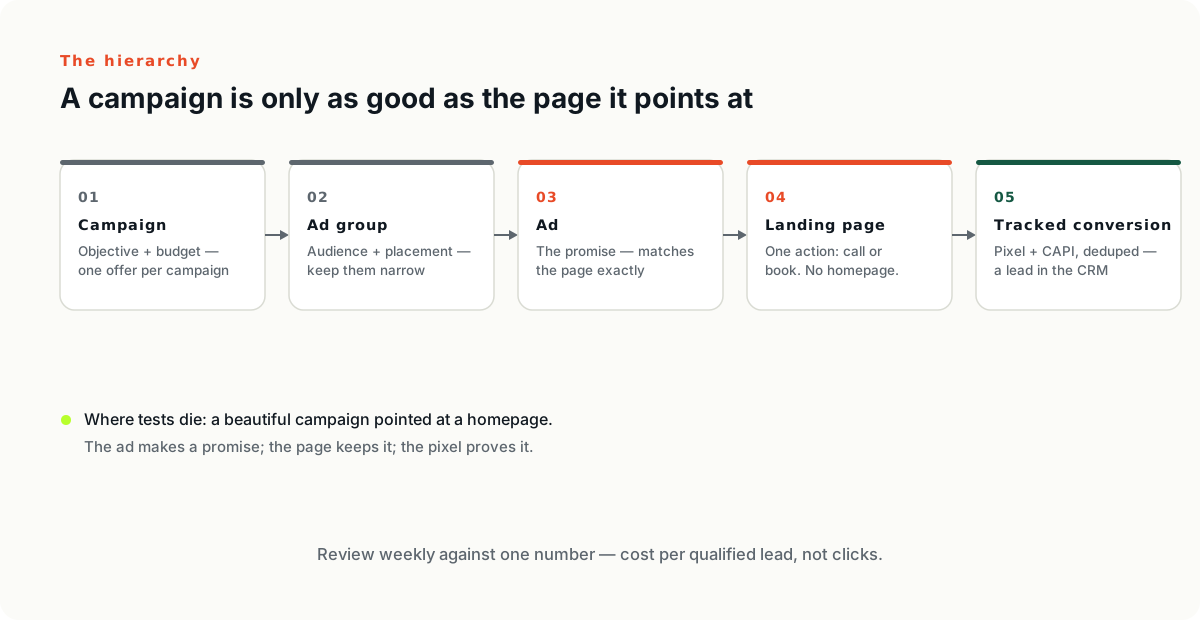
The hierarchy: campaign → ad group → ad → page
Discipline at each level is what lets you attribute outcomes to a specific theme later. Keep it tight:
- 01Campaign — one objective and budget. For an audit offer, the objective is booked audits, full stop.
- 02Ad groups — one theme or audience per group (e.g. by vertical or by pain point) so data stays legible.
- 03Ads — a tight message-to-offer match in each group. Don't promise what the page can't deliver.
- 04Landing page — one page per offer, built to convert and instrumented for tracking.
The landing page
The page is half the campaign. For a revenue leak audit, it should make one promise, show the proof, and ask for one action — book the audit. Strip distractions. Match the headline to the ad that drove the click. And wire conversion tracking on the actual booking action, not a page view, so the data reflects intent, not traffic.
“Every failed ads test I've audited died in the same place: a beautiful campaign pointed at a homepage. The landing page is the campaign.”
Tracking and the review loop
Structure without measurement is decoration. Connect the page's conversion to your CRM, run both the browser pixel and the server-side Conversions API with a shared event_id, and review on a cadence: what spent, what converted, what the lead quality looked like, and what to test next. That review loop is what turns a one-time test into a compounding channel.
- ›Fire conversions on the booking action, tied to a CRM record.
- ›Run pixel + Conversions API, deduplicated by event_id.
- ›Review weekly: spend, conversions, lead quality, next test.
- ›Change one variable at a time so you can read cause and effect.
The measurement detail: pixel, Conversions API, and dedupe