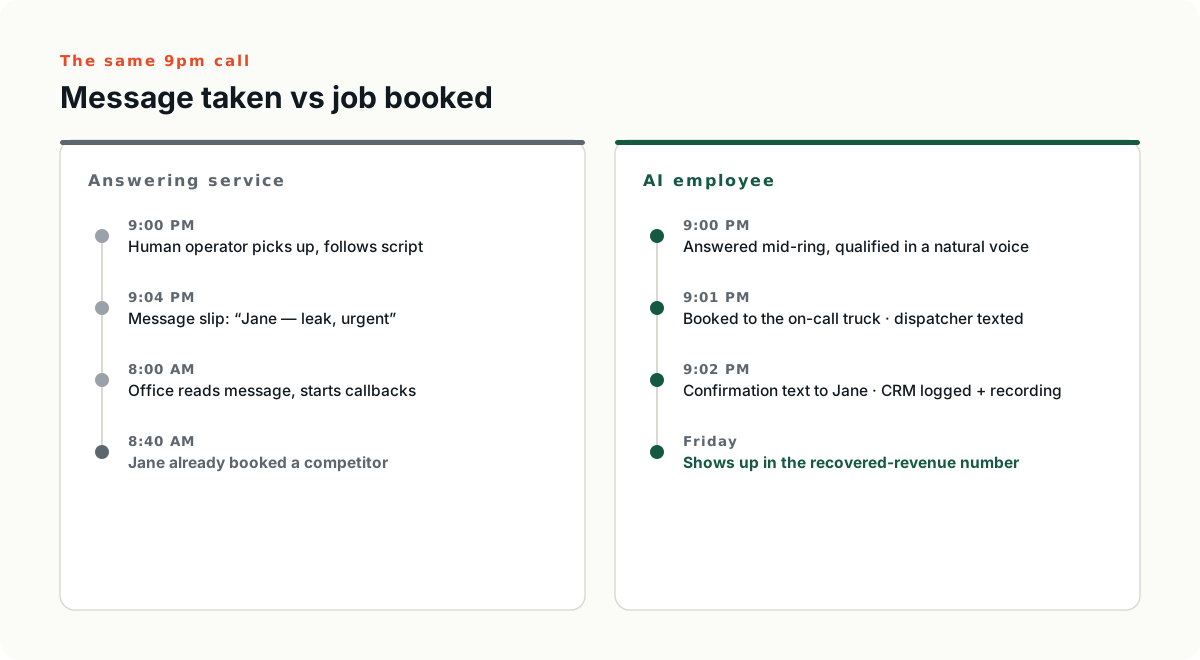
The difference between an AI employee and an answering service is what exists when the call ends. An answering service leaves you a message to act on tomorrow. An AI employee leaves you a booked job on your calendar, a dispatcher who already got the text, and a CRM record with the recording. One sells coverage. The other finishes the loop.
What an answering service actually does
A human operator — usually juggling scripts for dozens of unrelated companies — picks up, follows your greeting sheet, and writes down a name and number. For after-hours emergencies they page your on-call person. It beats voicemail, and for pure 'a human picked up' coverage it works. But the output is a message slip, and message slips still need someone to do the actual work in the morning — by which time the caller has often booked elsewhere.
The comparison, line by line
- ›Outcome: message taken and relayed — vs job qualified and booked into your real calendar, in about 30 seconds for emergencies.
- ›Business knowledge: a generic script — vs your services, service area, membership status, and triage rules (a no-heat call from a member routes differently than a new caller).
- ›Follow-through: ends when the message is sent — vs confirmation texts, follow-up cadences, and escalation with a transcript.
- ›Records: a text or email you file manually — vs every call logged to your CRM with recording and outcome, feeding a Friday report.
- ›Capacity: staffed shifts that queue on storm days — vs every call answered mid-ring no matter how many come at once.
- ›Voice: honest on both sides — a human voice is a human voice; the AI identifies itself and wins on speed, memory, and follow-through rather than pretending.
The cost comparison worth making
Don't compare monthly fees — compare cost per booked job. An answering service bills for minutes of coverage whether or not revenue happens. An AI employee's cost ($500–$2,200/month infrastructure plus the install) buys completed loops: calls that end in bookings, follow-ups that end in closes. The comparison that matters is what each dollar leaves on your calendar. Full cost anatomy:
AI receptionist cost: the honest breakdown
“I don't bash answering services — they beat voicemail. But a message slip at 9am about a 9pm emergency is a receipt for a job somebody else won.”
The question that settles it
At 9pm, a customer calls with a burst pipe. Tomorrow morning, do you want a note that says 'Jane called about a leak, sounded urgent' — or a job on the board, a tech who got the address at 9:01pm, and a customer who already got a confirmation text? That's the whole comparison.