Missed-call recovery means catching the inbound calls that currently die in voicemail — after hours, on storm days, while your office manager is on the other line — and turning them into booked jobs. After 5pm, 30–60% of inbound calls typically hit voicemail. This is the 30-day playbook for closing that leak.
How big is your missed-call leak?
Don't estimate — measure. Your phone system already knows. Pull last month's logs and count three things:
- 01Calls that hit voicemail, split by business hours vs after-hours.
- 02Voicemails that never turned into a callback within 24 hours.
- 03Storm-day or peak-season spikes — the days the leak doubles exactly when demand peaks.
Multiply missed calls by your booking rate and average ticket and you have the monthly cost of doing nothing. For the full formula, use the payback math:
AI employee ROI: the payback math to run before you buy
The loop, step by step
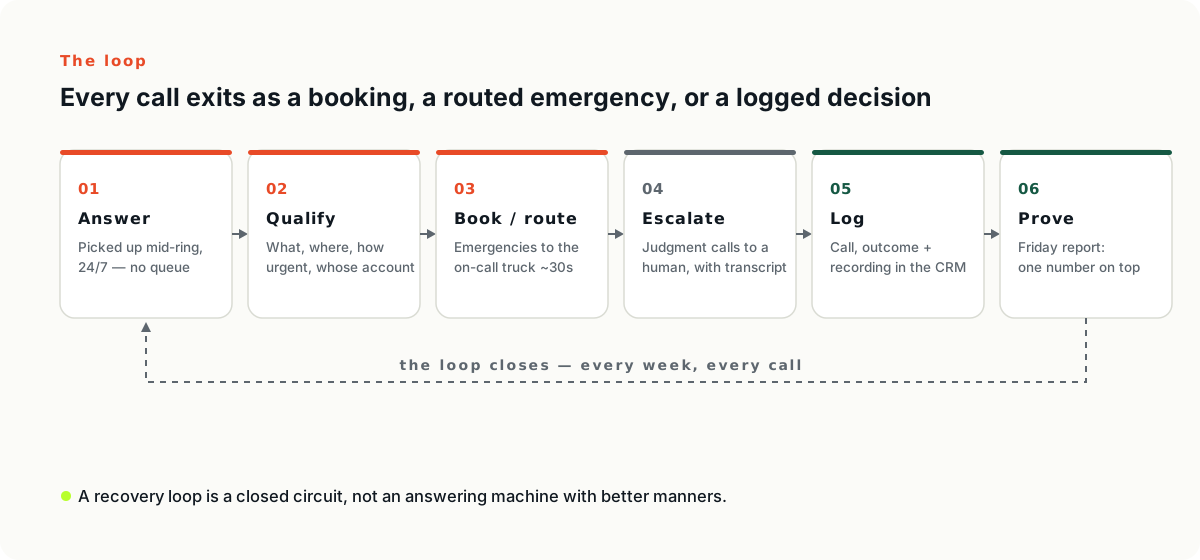
A missed-call recovery loop isn't an answering machine with better manners. It's a closed circuit — every call comes out the other end as a booked job, a routed emergency, or a logged decision:
- 01Answer — every inbound call picked up mid-ring, 24/7. No hold queue, no 'press 2'.
- 02Qualify — real questions in a natural voice: what's the problem, where, how urgent, whose account.
- 03Book or route — emergencies get booked to the on-call truck in about 30 seconds, with the dispatcher texted full context. Routine work goes straight onto the calendar.
- 04Escalate — angry callers, complex quotes, judgment calls: handed to a human, with a transcript.
- 05Log — every call written to the CRM: caller, need, outcome, recording. Nothing lives in a black box.
- 06Prove — a Friday report with one number on top: recovered-opportunity revenue this week.
“Storm days built this loop. I once watched a roofer's phone light up 340 times in one weekend — every unanswered ring was somebody else's booked job. That image doesn't leave you.”
What does good look like after 30 days?
Run it yourself or have it installed
The playbook is the same either way. Technical teams can run the $198 skill and wire it up themselves over 30–60 days with a developer. Or a managed install puts it live in about 30 days, tuned against your real call recordings, with your office manager trained to supervise it — not replaced by it.